Recently, I attended Dubai Watch Week’s 10th anniversary show, which brought together over 80 brands; each offering a glimpse into their own brand story, yet all echoing one unanimous narrative: watches are increasingly blurring into jewelry rather than mere timekeepers, and this shift will open multiple new directions for where the industry evolves next.
From brands like Chopard experimenting with intricate guilloché engravings to Van Cleef & Arpels showcasing meticulous artisan work through miniature butterflies and flowers crafted inside their watches, the industry is clearly expanding its vocabulary of craft and storytelling.
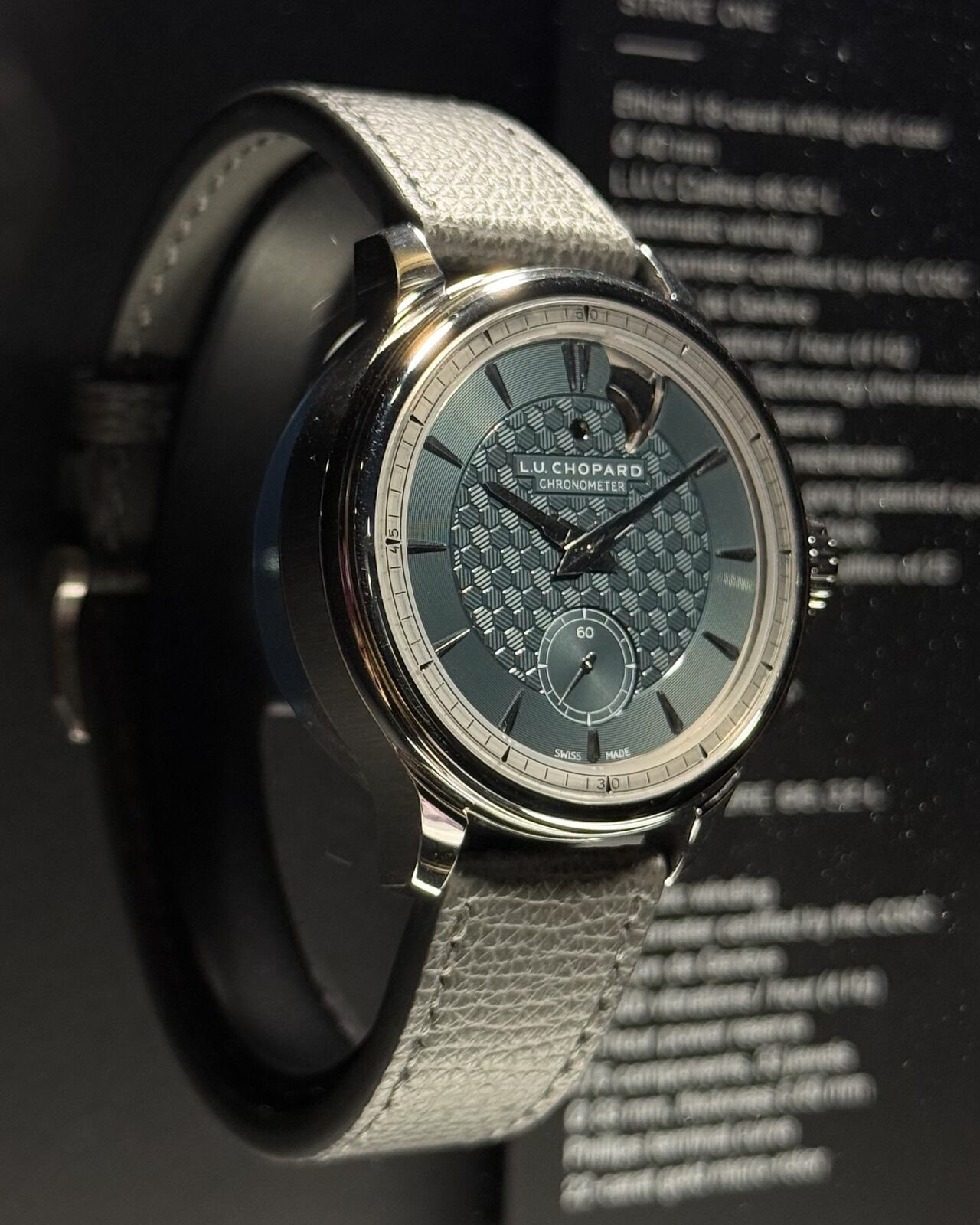
As someone who personally loves patterns and considers them a core part of my creative process, it’s no surprise that the Chopard exhibition had a special place in my heart. The maison is known for combining multiple patterns within a single movement in their watches. However, I was particularly in awe of the L.U.C Strike One. Its hand-guilloché honeycomb motif, paired with the internal grain lines of each hexagon, creates a theatrical interplay between light, shadow, and color. It’s a refreshing reminder of how much narrative power engravings hold when executed with intention.
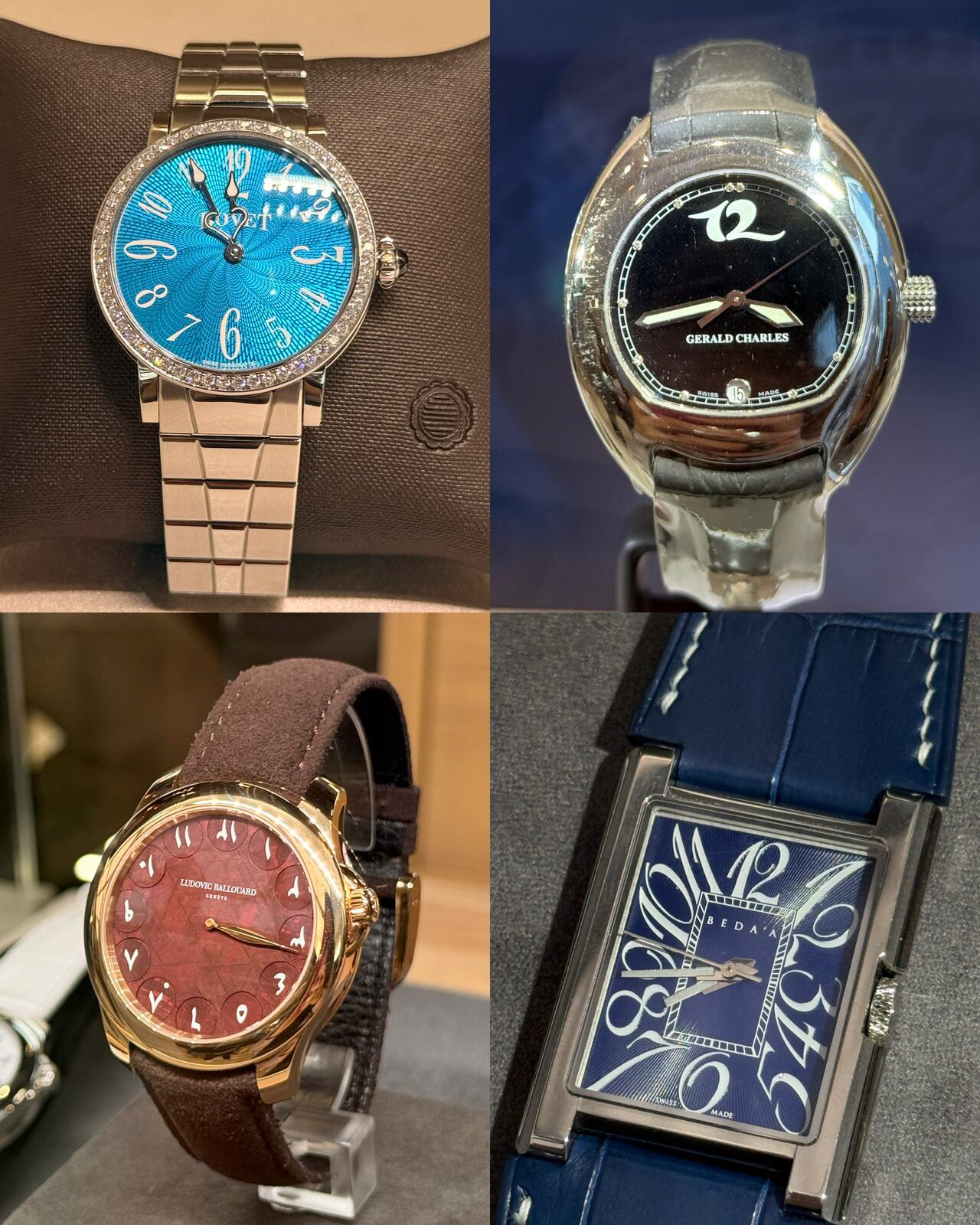
Of course, the graphic designer in me couldn’t help but be drawn to the experimentation in dial typography. Some brands embraced whimsical numerals; others flipped, stretched, or exaggerated the fonts; and many played with scale in ways that felt daring and refreshing. This alone reflects how much room remains for exploration in contemporary horology. I do believe that there is still so much untapped potential, especially in conceptualizing the meaning of numerals, exploring cultural numbering systems, or even merging serif with sans-serif instead of relying on one uniform typographic approach.
A striking example of how watches have become artistic and jewelry pieces would be the Jacob & Co. Casino Tourbillon Pavé, a piece where haute horlogerie truly meets the theatrical glamour of high-stakes gaming. As stated on the brands website, it features a 44mm rose-gold case with 440 diamonds, a dial pavé-set with 136 diamonds, a fully functional roulette mechanism, and a high-performance flying tourbillon. And yes, tourbillons have become a signature feature of “luxury,” but this one pushes the concept further. The roulette wheel is engineered to be as large as the case and the white ball bounces long enough to make the Casino Tourbillon feel like a portable game of chance. This watch not only embodies haute horlogerie but also demonstrates how experiential design can be embedded directly into a product. The flying tourbillon is reimagined as part of the roulette wheel which highlights how mechanical innovation can serve both functional and emotional roles. By transforming the casino into a mechanical complication, the watch becomes a bridge between memory, thrill, play, and luxury which turns the object itself into a narrative.
This shift reflects a broader trend in which consumers today are not only seeking experiential retail or personalization but they also increasingly expect the product itself to deliver experiential value. And this is where the industry’s challenge lies: How do brands balance their established identities with new motifs, shapes, materials, and interactive elements - without compromising their heritage or long-standing brand systems?
In high-end luxury, design decisions are rarely driven purely by aesthetics or current trends. They are deeply strategic and often projected five to ten years ahead. This long-term vision becomes especially complex during periods of economic and political uncertainty – a point that creative directors and CEOs openly discussed in this year’s DWW Horology Forum. Some brands, like Leica – renowned for their expertise in cameras and relatively new to watchmaking — were transparent in stating that the true impact of their current work will only be visible by 2030. These realities are crucial for independent designers or emerging entrepreneurs hoping to enter the market.
Today’s landscape raises critical questions: Will consumer demand remain stable? Will KPIs shift toward more flexible structures that can withstand daily changes in tariffs and regulations? How will the fluctuation of gold and raw material prices reshape production? Even I hold personal doubts about whether gold will continue to dominate as a value anchor in luxury, or whether emerging materials will eventually take the spotlight. I think we’ll have more tangible answers by 2026 as systems and beliefs continue to metamorphose this year. These unknowns play a major role in shaping the future of watchmaking – and the future of the luxury industry as a whole.
To return to the Jacob & Co. piece…
Ultimately, luxury has always sold the dream — destiny, fortune, possibility, rebirth, and the magnetic thrill of chance. The Casino Tourbillon encapsulates all of these emotional cues, especially the aspirational feeling of “I am lucky and I made it.” But beyond the symbolic reasoning behind choosing a casino motif, there is also a strong data-driven justification for this collection. According to recent projections, the global casino market is experiencing steady growth. It’s expanding from $141.42 billion in 2024 to an estimated $173.27 billion by 2029, with a CAGR of 4.2%. For luxury houses that operate with a 5 to 10-year strategic horizon, this upward trajectory is more than a statistic; it signals long-term cultural relevance and opportunity. In this context, the Casino Tourbillon becomes more than a playful mechanism; it is a calculated response to measurable shifts in entertainment, wealth culture, and experiential consumption. Jacob & Co.’s Casino Tourbillon Pavé is therefore both a tribute to the psychology of fortune and a strategic alignment with a sector whose influence will continue to shape luxury desire well into the next decade.
In my opinion, the brands with the most compelling pieces at Dubai Watch Week were those whose design language and kinetic mechanisms created space for consumers’ own imagination. Certain watches resonated with fragments of my own personal memory and emotions which as a result formed an instant connection and allowed me to build my own narrative around them. And so, the true mastery lies in being able to create intricate yet universal narrative designs that allow consumers to feel chosen, not just seen.
P.S. I’ve also shared two reels and a photo carousel from Dubai Watch Week on my Instagram, featuring additional visuals and reflections from the show. Feel free to explore them there.